

4 things you should know about palm oil
1. What is palm oil?
It is an edible vegetable oil that comes from the fruit of the oil palm (scientific name: Elaeis guineensis). Two types of oil can be produced: crude palm oil comes from squeezing the pulp of the fruit, and palm kernel oil comes from crushing the seed (located in the center of the fruit).
Oil palms are native to Africa but were exported to Southeast Asia just over 100 years ago as an ornamental crop. Today, Indonesia and Malaysia account for more than 85% of the world’s supply, although there are 42 other countries that also produce palm oil.
2. What products is it in?
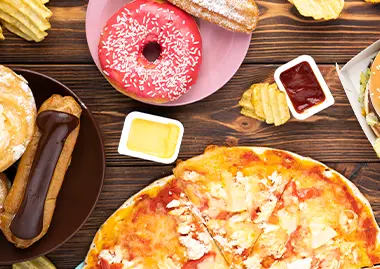
Palm oil is in almost everything: it is found in about 50% of the packaged products we see in supermarkets, from pizza, donuts, and chocolate to deodorant, shampoo, toothpaste, and lipstick. It is also used in animal feed and as a biofuel in many parts of the world.
3. Why is palm oil everywhere?
Palm oil is extremely versatile. It is semi-solid at room temperature (useful for spreads), resistant to oxidation (prolongs shelf life), stable at high temperatures (ideal for frying), and odorless and colorless (does not alter the appearance or smell of food). In many Asian and African countries, it is used as cooking oil, just as sunflower or olive oil is used in other places.
In addition, compared to other vegetable oils, the oil palm is a very efficient crop: it produces large amounts of oil in small areas of land, almost all year round. This makes it an attractive option for producers and small farmers, who can rely on more consistent income.
4. Why don’t we switch to an alternative vegetable oil?
Palm oil is an incredibly efficient crop and produces more oil per land area than any other equivalent vegetable oil crop. Globally, palm oil supplies nearly 40% of the global demand for vegetable oil using less than 6% of the land used to produce vegetable oils.
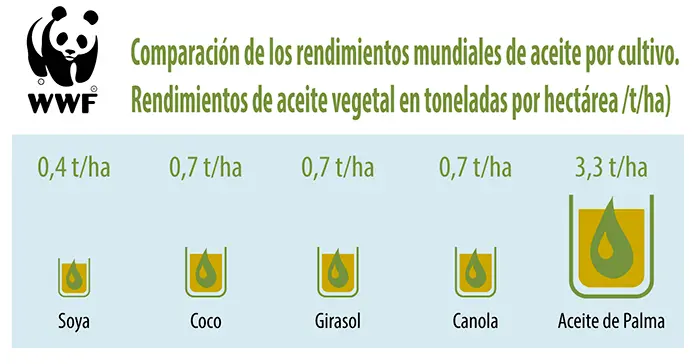
To obtain the same amount of oil with alternatives such as soy, coconut, or sunflower, 4 to 10 times more land would be needed, which would shift the problem to other regions and could threaten habitats, species, and communities. In addition, millions of small farmers depend on palm oil production for their livelihoods. Therefore, boycotting or affecting production is not the answer: the important thing is to ensure sustainable production that does not affect the environment or the quality of life of farmers.
Follow us on our social networks and website to learn more about the cultivation, benefits, characteristics, production, environment, and derivatives of oil palm.
We are GREMCA, Sustainable Agriculture and Energy.