

How did Colombia become Latin America’s palm oil powerhouse?
Commercial cultivation of oil palm in Colombia began in 1945, when an American company established a plantation in the banana zone of the department of Magdalena.
Following the country’s economic liberalization in the 1990s and the election in 2002 of former President Álvaro Uribe, the palm oil industry began a trajectory of rapid growth over the next 16 years.
Today, Colombia produces more palm oil than any other country in Latin America and is considered the fourth largest producer in the world.
With the disarmament and demobilization of the country’s oldest and largest guerrilla group, the FARC, in 2016, the government proposed the opening of a new chapter in national history. One of the central objectives of the peace process was to expand economic and social investment in the countryside, promoting agricultural development, especially in areas that were previously out of reach due to the conflict.
Palm oil: rebirth of the countryside?
The then Minister of Agriculture, Juan Guillermo Zuluaga, pointed out that the palm oil industry would play a fundamental role in the “rebirth of the countryside” promoted by the central government.
Colombia produces more palm oil than any other country in Latin America and, since 2016, has been considered the fourth largest producer in the world. The National Federation of Oil Palm Growers (Fedepalma) reported that a record 1.6 million metric tons of crude palm oil was reached in 2017, representing an increase of 42% compared to the previous year.
According to the National Administrative Department of Statistics (DANE), exports related to palm oil generated USD 414 million in revenue for Colombia in 2017, an increase of 48% compared to the previous year, with the majority destined for the European Union.
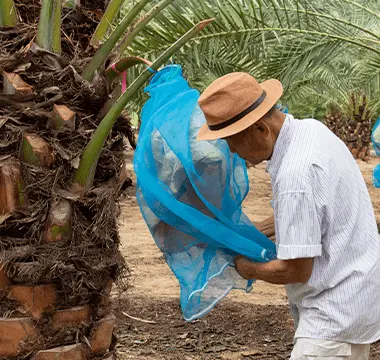
Palm oil, along with ethanol, constitutes the backbone of the biodiesel industry in Colombia, which by law must represent 10% of the fuel for automobiles marketed in the country.
During the first decades, the palm oil produced in Colombia was mainly destined for local markets. However, starting in the 1990s, the industry began a stage of accelerated expansion.
According to Fedepalma, the cultivated area grew by more than 200% in less than two decades, going from 157,000 hectares in 2000 to 516,000 hectares in 2017.
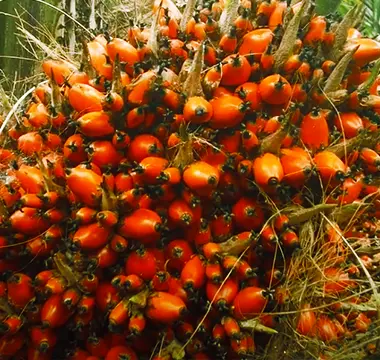
To promote this expansion, the government of the time granted incentives such as reduced tax rates and financing options. Research by academic Victoria Marín-Burgos shows that these policies facilitated the arrival of oil palm projects in municipalities with a history of forced displacement.
Currently, the production of oil palm continues to increase, projecting Colombia as an increasingly relevant leader in the Latin American and global context.
Follow us on our social networks and website to learn more about the cultivation, its benefits, characteristics, production, environmental impact and derivatives of oil palm.
We are GREMCA S.A., Sustainable Agriculture and Energy.